
Why Indie Game Studios Are Testing AI Cutscenes
For a five-person studio the cutscene was always the thing that got cut. Generative video changed the floor, not the ceiling, and previz is where the economics actually move.
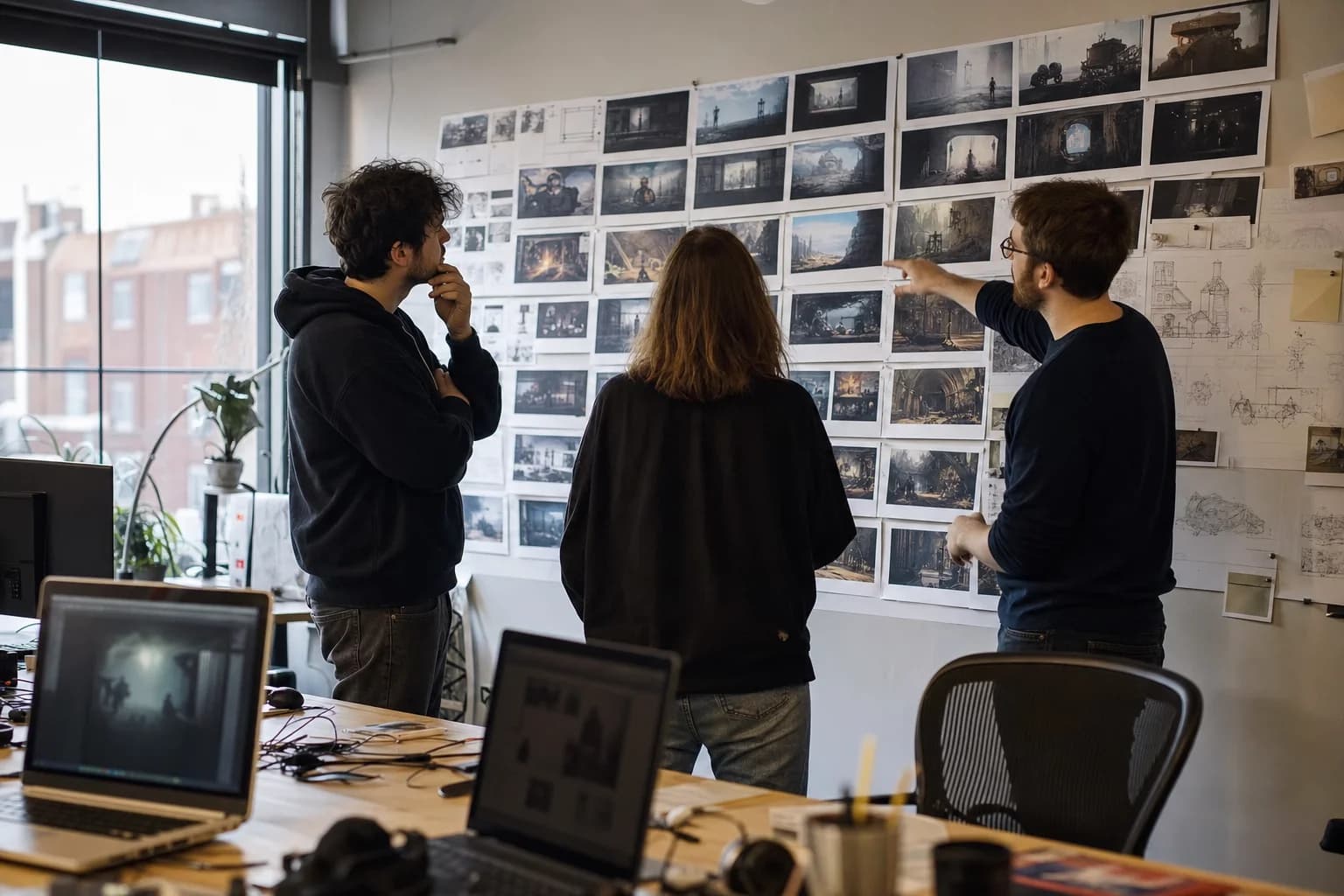
A five-person studio in Oakland can build a good game. It cannot, historically, build a good cutscene.
That asymmetry has shaped independent games for a decade. Cinematics are the first thing cut from a small project, not because teams do not want them but because a cutscene is the single most labour-dense minute of content in a game. Character models have to hold up in close-up. Cameras have to be staged. Animation has to be hand-tuned per shot. A studio that can ship a hundred hours of gameplay can be genuinely unable to ship ninety seconds of story sequence.
Generative video has changed the arithmetic on that, though not in the way the demo reels suggest.
What the demos get wrong about cutscenes
Almost every generative video showcase optimises for the wrong thing. A stunning eight-second clip proves a model can render. A cutscene asks a different question: can it render the same character four times in a row without redesigning them.
Single-shot video models produce each clip independently, with no memory of the one before. Ask twice for "a woman in a red scarf with a scar over her left eye" and you get two different women who both technically match the description. For a mood piece this is invisible. For a scene where the protagonist appears from five angles, it destroys the scene.
The blunt version, and the thing worth telling any founder evaluating this category: the constraint on AI cutscenes is not image quality, it is whether the character survives the cut. Frame quality passed the bar a while ago. Continuity did not.
The structural fix
The approach that addresses this does not treat the character as a text description at all. It establishes the character as a locked asset before any footage is generated, then makes every shot reference that asset.
OiiOii's AI tool for game cutscenes is built around that ordering. Its Character Designer and IP Designer agents fix the character and its design first; a Scene Designer and Storyboard Artist handle staging and shot sequence; a Sound Director scores the result. The generation step comes last and is constrained by everything upstream of it. The platform routes 28 different underlying models — Kling, Seedance, Sora 2, MiniMax H3, Vidu, the Midjourney Niji line and others — through that same pipeline, which turns model selection into an art-direction choice rather than a platform commitment.
The general principle matters more than any one product: if a tool lets you start generating before it has made you define a character, it is going to drift.
Where the economics actually change
The interesting shift for small Bay Area studios is not "AI makes our cutscenes." It is previsualisation.
Previz — blocking out shots, pacing and staging before committing production time — is standard practice at large studios and almost nonexistent at small ones, purely on cost. It is also the ideal generative use case, because previz output is a planning artefact. Nobody ships it. A little drift costs nothing. And the value of knowing your scene does not work before you animate it is enormous at any studio size, and existential at a five-person one.
Teams that adopt this for previz first consistently report better outcomes than teams that try to ship a final sequence on day one, for the obvious reason: the first use case tolerates the technology's actual weakness, and the second does not.
The second-best entry point is content that sits adjacent to the game rather than inside it. A stylised intro. A lore flashback. An animated trailer for the store page. These are pre-rendered by nature, they are not load-bearing for gameplay, and a studio can evaluate honestly whether the result holds up before betting a shipped asset on it.
In-engine is not going anywhere
It is worth being precise about what generative tools do not do, because the overclaiming in this category is considerable.
In-engine cinematics use the game's own rigged assets and camera. They are exactly on-model because they are the model. No current generative tool renders your specific rigged character out of your specific engine build, and none is close. Studios with a working in-engine cinematics pipeline should not be dismantling it.
What changes is the floor, not the ceiling. The studios affected are the ones whose cutscene count was previously zero.
A cheap evaluation before you commit
Any team assessing this category can run a decisive test in an afternoon:
- Define one character with a specific, checkable detail — a scar, an asymmetric costume element, an unusual colour.
- Generate four shots: wide, medium, close-up, and a rear view turning to three-quarters.
- Lay the stills side by side and inspect only face structure, silhouette, and that one detail.
- Regenerate the weakest shot twice. Does it converge toward the others, or wander?
Convergence means the tool is genuinely referencing a fixed character. Wandering means it is re-rolling a description each time, and no amount of prompt refinement will fix that.
Then check three things that specifically matter for games rather than general video: that the tool builds your original characters cleanly rather than approximating existing game IP; that it can hit your art direction rather than one default house style; and that it has an explicit shot-ordering step, because a cutscene is a sequence and tools without a storyboard stage push that work back into your editor.
The honest read
The category has moved from "obviously not ready" to "ready for a specific slice of the pipeline," which is a real change and a narrower one than the marketing implies.
For a small studio the practical sequence is previz, then a non-critical stylised sequence, then a genuine judgement about whether continuity is good enough for anything shipping in-game. Generate, review the continuity without generosity, regenerate what drifts, and keep a person directing the shot order.
The limiting factor has moved from rendering to direction. For a five-person team that previously had no cutscenes at all, that is the difference between skipping the story sequence and shipping one.