
Levi's Stadium World Cup 2026 in Bay Area
Neutral, data-driven analysis of Levi's Stadium hosting the World Cup 2026 in the Bay Area and its significant impact on the tech market.
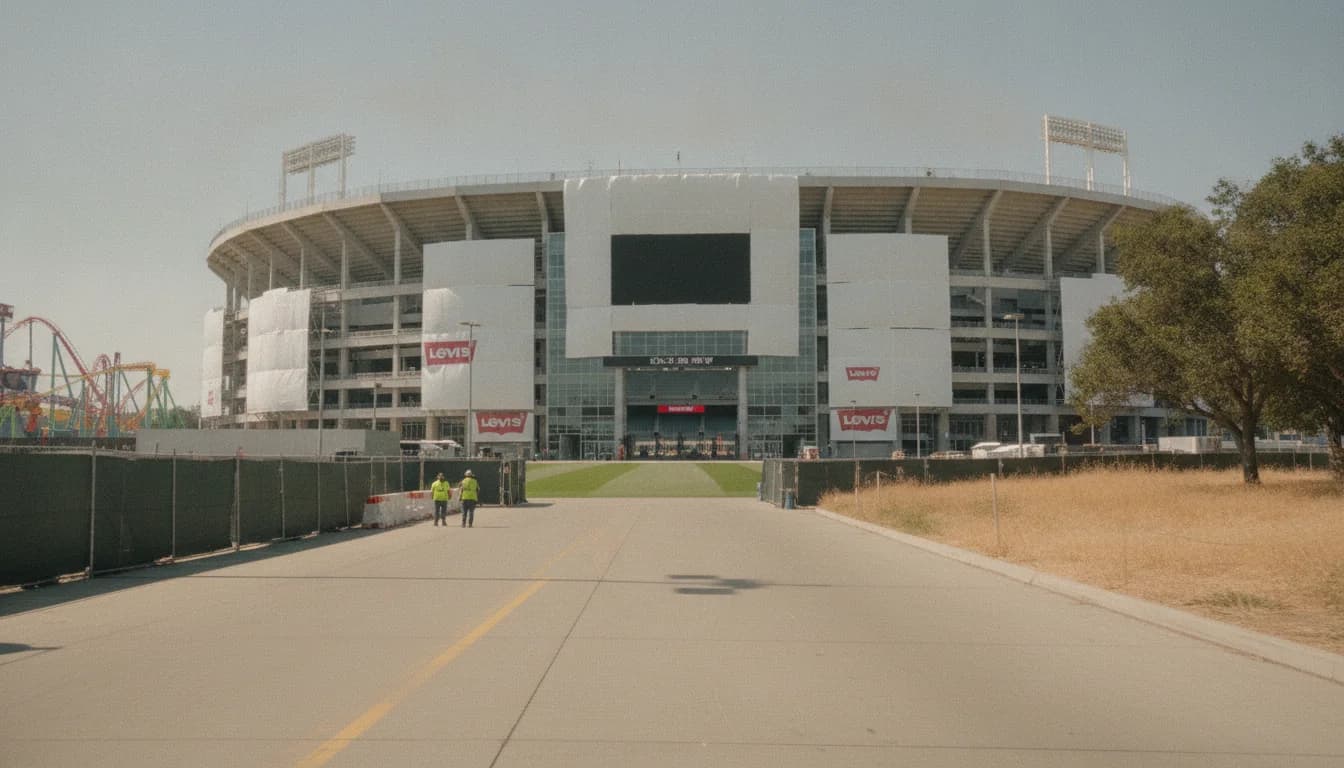
The Levi's Stadium World Cup 2026 is moving into a concrete phase for the San Francisco Bay Area, with Levi’s Stadium designated as a host venue for FIFA’s 2026 tournament. In Santa Clara, California, officials confirmed that the Bay Area will welcome six World Cup matches as part of the United States–Canada–Mexico hosting slate, a development that carries implications for regional technology deployment, transportation planning, and local business ecosystems. The Bay Area’s role as a World Cup host aligns with broader national and international attention on stadium modernization, fan experience upgrades, and security operations tailored to mega-events. As the Bay Area readies for the competition, the region’s tech-forward identity is likely to shape both on-site infrastructure and ancillary economic activity surrounding the matches. (fifa.com)
This news matters not only for football fans planning trips to Santa Clara but also for local businesses, technology providers, and public agencies coordinating large-scale events. FIFA’s venue allocation highlights Levi’s Stadium as the Bay Area anchor for World Cup 2026, underscoring the stadium’s capacity to host high-demand international fixtures and its position within a broader system of host cities across the United States. For the Bay Area, the event tests capabilities in fan connectivity, real-time information delivery, and security collaboration among federal, state, local, and private-sector partners. The announcements also come against the backdrop of federal and regional investments aimed at strengthening event readiness, including security coordination and transportation services that will be tested in real-time as matches approach. (ussoccerplayers.com)
What Happened
Venue confirmation and regional designation
In the official rollout of FIFA’s 2026 World Cup, Levi’s Stadium in Santa Clara has been identified as the Bay Area host venue for World Cup 2026 matches. The stadium is described in FIFA’s tournament materials as part of the San Francisco Bay Area Stadium complex and is listed among the 16 U.S. venues to stage tournament matches. This designation follows the region’s earlier bid activities and public-sector planning, with the Bay Area Host Committee coordinating local readiness. The confirmation places Levi’s Stadium within a select group of U.S. venues that are expected to accommodate a diverse international audience and multiple matches across the group and knockout phases. (fifa.com)
The U.S. Soccer and FIFA materials further specify that the San Francisco Bay Area Stadium will host six matches during the World Cup 2026, comprising five group-stage games and one Round of 32 encounter. This allocation positions the Bay Area to contribute meaningfully to the tournament’s early rounds, while distributing fan traffic across the region and leveraging Levi’s Stadium’s 70,000-plus seating capacity under configured event conditions. The official FIFA venue guide confirms the Bay Area’s six-match slate, while U.S. Soccer’s city-by-city breakdown highlights Levi’s Stadium as the Santa Clara site for Bay Area fixtures. (fifa.com)
Timeline and key facts surrounding the Bay Area matches
Public-facing timelines indicate Levi’s Stadium will operate as the Bay Area football hub for a segment of World Cup 2026, integrating with the local calendar of events and security operations. AP News coverage emphasizes that Santa Clara will host six World Cup games—five in the group stage and one knockout match—illustrating the expected cadence of the Bay Area tournament footprint. The Bay Area’s match schedule is expected to feature an assortment of group-stage fixtures that will drive international attendance to the capital region’s venues and accommodations. The Bay Area’s six-match plan fits within FIFA’s larger global scheduling, which places final and knockout-round matches in various North American venues across the tournament window. (apnews.com)
Preparations around stadium technology and operations
The tech backbone supporting Levi’s Stadium’s World Cup 2026 role is already a focal point for operators and partners. Industry reporting and official technical disclosures point to a robust connectivity and display strategy, spanning stadium-wide Wi‑Fi, advanced mobile connectivity, and ultra-high-definition video boards designed to enhance fan experience during World Cup 2026. The stadium’s technology partners have highlighted a multi-faceted upgrade program that includes expansive wireless coverage, an integrated data center, and high-density network infrastructure intended to handle the surges associated with mega-events. These preparations are consistent with the Bay Area’s broader emphasis on connectivity and data-driven event management tied to the World Cup footprint. (levisstadium.com)
Security and operations readiness are central to Levi’s Stadium’s World Cup 2026 plan. Federal, state, and local authorities have outlined coordination strategies for mega-events, and recent security-related releases from federal authorities underscore ongoing, post-event wrap-up work, including investigations and enforcement coordination in the Bay Area. The FBI’s San Francisco field office publicized the completion of FIFA World Cup 2026 security operations at Levi’s Stadium, reflecting interagency and private-sector collaboration to ensure safety and incident response readiness for the Bay Area matches. Local transit agencies are similarly adapting schedules and capacity to accommodate event-related flows. (fbi.gov)
Contextual background on the Bay Area as a World Cup host
The Bay Area’s appearance on the World Cup 2026 map is supported by multiple credible sources that outline the tournament’s footprint in the United States. FIFA’s official stadium pages and event briefs designate Levi’s Stadium as the Santa Clara site for World Cup competition, with Bay Area-specific match guides noting a cluster of events and fan-facing activities designed to bring attention to the region’s stadium infrastructure and technology ecosystem. Local and national outlets have captured the arc of readiness, including public statements from the City of Santa Clara and regional host committees about logistics, security, and community engagement around Levi’s Stadium World Cup 2026. (fifa.com)
Why It Matters
Economic and tourism implications for the Bay Area
The Levi’s Stadium World Cup 2026 designation places the Bay Area in a select set of host regions that will see international visitors, media attention, and consumption across hospitality sectors. Coverage from national outlets notes expectations of substantial event-related activity, with analysts and industry observers highlighting elevated demand for hotels, transportation, and dining experiences in the Bay Area during the tournament window. Axios San Francisco has reported on Bay Area preparations and the potential for significant visitor traffic, while local outlets have tracked funding and readiness programs aimed at supporting security, mobility, and event operations. Taken together, these sources frame World Cup 2026 in Santa Clara as a regional economic and reputational event, not merely a series of soccer matches. (axios.com)
Federal and state investments tied to World Cup readiness also influence the Bay Area’s broader market dynamics. Reports about federal funding for World Cup costs, as well as state and regional allocations for security and logistics, illustrate a multi-year investment cycle around the Bay Area’s World Cup 2026 footprint. These funds support not only stadium-specific improvements but also transit enhancements, crowd management capabilities, and vendor ecosystems that serve the tournament and future mega-events. The Bay Area’s experience with large-scale events—such as prior major games and the 2026 Super Bowl—provides a proving ground for the region’s ability to scale services and technology for international audiences. (sfchronicle.com)
Technology and fan experience as a regional strength
A core dimension of Levi’s Stadium World Cup 2026 is the technology stack deployed to enhance fan engagement, security, and operational efficiency. The stadium’s own technology pages highlight a comprehensive approach, including stadium-wide Wi-Fi connectivity, mobile engagement, IPTV, and expansive video displays designed to deliver a premium, data-rich experience for attendees. Industry coverage of recent mega-events underscores the Bay Area’s role as a technology testbed for stadium connectivity, with Cisco and other technology partners coordinating to deliver data-driven experiences that are scalable for global events. These advancements are not only about entertainment value; they also enable real-time analytics, smarter ingress/egress flows, and improved safety monitoring during high-traffic periods. (levisstadium.com)
Connectivity is central to the Bay Area’s World Cup strategy. Public statements from major partners indicate that the Levi’s Stadium network is designed to support large crowds, with reports of large-scale Wi-Fi deployments, high-density coverage, and interconnected data centers that can handle event-scale demand. Industry observers point to Wi‑Fi 6/6E deployment and robust 5G coverage as enabling technologies for fan apps, mobile ticketing, wayfinding, and dynamic in-stadium services. The collaboration among stadium operators, telecom providers, and hardware vendors is framed as a blueprint for future mega-events in the region and beyond. (corporate.comcast.com)
Security, mobility, and public safety considerations
Security planning is a persistent throughline for World Cup 2026 in the Bay Area. Federal, state, and local authorities are coordinating around a layered security approach that blends physical surveillance, real-time monitoring, and interagency information sharing. Public transportation providers have also articulated enhanced service and safety measures to manage fan movement before, during, and after matches. For example, Bay Area transit agencies have outlined augmented staffing, signage, and scheduling to accommodate increased ridership on match days, while continuing to serve non-event travel needs. These efforts are complemented by private-sector collaborations focused on situational awareness and rapid incident response. (bart.gov)
Market and competitive dynamics for the Bay Area tech ecosystem
The Levi’s Stadium World Cup 2026 footprint amplifies opportunities for local tech firms, system integrators, and service providers. The Bay Area’s established base in connectivity, edge computing, and data analytics positions it to leverage World Cup-related deployments for ongoing commercial use cases. The event is a platform for showcasing capacity planning, resilient network designs, and scalable fan services that can be repurposed for other large-scale sports and entertainment events. Industry publications and regional coverage have begun to analyze the market implications, including how Bay Area vendors may benefit from long-term contracts tied to stadium operations, as well as the potential for knowledge transfer to similar mega-events around the world. (newsroom.cisco.com)
What’s Next
Key milestones and timeline for Levi’s Stadium World Cup 2026
With the formal venue confirmation in place, the Bay Area’s focus shifts toward operational readiness, fan experience design, and security integration. The World Cup 2026 schedule allocates Levi’s Stadium six matches, including five group-stage fixtures and one knockout Round of 32 game, positioning the venue for a multi-week window of intense activity. The Bay Area Host Committee and city authorities have outlined ongoing planning actions, including traffic management plans, stadium ingress/egress workflows, and community engagement initiatives designed to support local residents, visitors, and businesses. While FIFA’s official venue pages provide the high-level allocation, regional agencies will publish more granular timetables as the tournament nears. (fifa.com)
Next steps for fans, businesses, and residents
For fans planning to attend Levi’s Stadium World Cup 2026 matches, the immediate steps involve staying informed about match dates, ticketing windows, and transportation options. Bay Area transit providers, including BART, have signaled enhanced service and safety measures aligned with World Cup activities, and local venues are expected to publish detailed guidance closer to kickoff. Businesses near Levi’s Stadium can anticipate increased foot traffic during tournament periods, with opportunities spanning hospitality, retail, and sponsored experiences. The Bay Area’s readiness narrative emphasizes accessibility, security, and a well-coordinated visitor experience designed to minimize disruption for residents while maximizing positive spillovers for the regional economy. (bart.gov)
What to watch in the tech and market domains
Technology proponents will be watching how the Levi’s Stadium network handles peak demand, particularly during marquee fixtures when international media coverage and large crowds converge. Reports from Cisco and other technology providers underscore ongoing upgrades in the stadium’s connectivity architecture, including high-density wireless coverage, video wall scalability, and data-center depth that can support analytics-driven fan services. Observers will look for performance metrics such as connection reliability, latency, and the seamless integration of mobile ticketing with venue apps. The Bay Area’s tech ecosystem is expected to translate these capabilities into measurable improvements in fan engagement, operational efficiency, and post-event value creation for sponsors and partners. (newsroom.cisco.com)
Long-term regional impact and legacy considerations
Beyond the World Cup 2026 matches, Levi’s Stadium’s role as a technology-forward venue contributes to the Bay Area’s broader legacy in sports technology. The partnership between the stadium and its technology providers places Santa Clara at the forefront of meg-event readiness, with learnings that can inform future regional planning for similar events. Local policymakers and business leaders are likely to assess the economic multipliers associated with visitor spend, job creation, and infrastructure improvements, while also considering the social and environmental footprints of large gatherings. The World Cup’s Bay Area footprint could serve as a template for integrating state-of-the-art connectivity, security protocols, and citizen-centric event design into future public-facing megaprojects. (sfchronicle.com)
What’s Next (continued) and Public Engagement
Community updates and governance
Ongoing communications from the City of Santa Clara, the Bay Area Host Committee, and FIFA/USSF channels will shape how residents experience the World Cup 2026 in Levi’s Stadium. Local governance documents and public-facing briefings provide a lens into how security zones, crowd management, and public access points will be delineated during match days. As the event approaches, expect a steady stream of community updates detailing safety measures, transportation advisories, and opportunities for neighborhood involvement in World Cup-related activities. (santaclaraca.gov)
Stakeholder coordination and transparency
The World Cup 2026 footprint in the Bay Area hinges on effective collaboration among federal authorities, state transit agencies, local law enforcement, stadium operators, and private-sector partners. Public-facing statements underscore a commitment to transparency around security protocols, data handling, and incident response. With Levi’s Stadium as a focal point, stakeholders will continue to publish progress reports, readiness assessments, and post-event reviews designed to document lessons learned and establish best practices for future mega-events. (fbi.gov)
Closing
The Levi's Stadium World Cup 2026 marks a milestone for the Bay Area as it positions Santa Clara’s Levi’s Stadium at the center of a multi-city global tournament. The six-match Bay Area slate, including five group-stage fixtures and one Round of 32 showdown, underscores the region’s capacity to host world-class events while showcasing a technology-forward fan experience and a resilient operations framework. For observers, the event presents a unique opportunity to study how a high-profile mega-event can drive technology deployment, regional economic activity, and public-safety collaboration in a way that resonates far beyond the tournament itself.
As the Bay Area readies for World Cup 2026, readers can expect ongoing reporting on match dates, travel logistics, ticketing, and the evolving technology landscape embedded in Levi’s Stadium’s World Cup footprint. The Bay Area’s approach—combining data-driven planning, standardized security protocols, and fans-first service design—offers a template for other regions seeking to balance blockbuster events with the everyday needs of the communities they call home. Stay tuned for updates on schedules, infrastructure, and the observable impacts of Levi’s Stadium World Cup 2026 as the tournament draws nearer and the world converges on Santa Clara.