
Salesforce Layoffs San Francisco 2026 Update
Salesforce layoffs in San Francisco for 2026 are thoroughly analyzed with comprehensive data on timelines, employee numbers, and local economic impact.
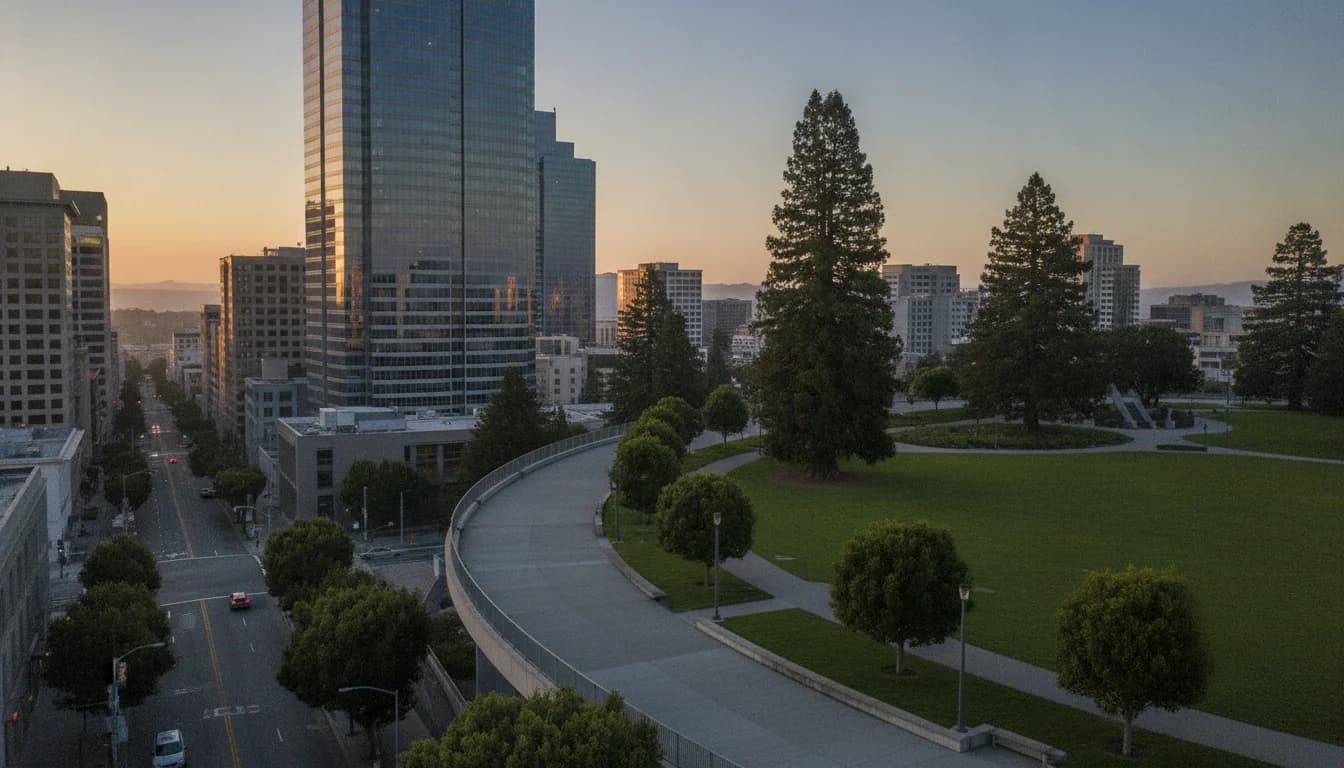
Salesforce layoffs San Francisco 2026 have become a focal point in the Bay Area’s ongoing tech workforce reshaping. In the first half of the year, the company signaled multiple rounds of cuts affecting its San Francisco workforce, with the most recent rounds occurring as executives pursue AI-driven efficiency. The story isn’t isolated to Salesforce alone: the region has seen a wave of layoffs across major tech and adjacent sectors, making the Salesforce actions part of a broader trend that touches offices, housing, and urban planning in the Bay Area. For readers of SF Bay Area Times, this coverage aims to present the data-driven picture—who is affected, when, and what it could mean for the local technology ecosystem, the job market, and the city’s office landscape.
Salesforce’s layoffs in San Francisco come at a time when the city remains a major, though evolving, hub for technology and innovation. The company is widely recognized as San Francisco’s largest private employer, a status that amplifies the local significance of any workforce reductions. As reports show, the company has undertaken several rounds of job reductions in the past year, underscoring a corporate recalibration centered on AI integration and cost optimization. In the Bay Area, these moves are not isolated to one firm; a broader set of employers—ranging from e-commerce platforms to enterprise software providers—has announced job cuts, reflecting a regional pattern of adjustments in response to shifting demand, AI adoption, and global market conditions. The interplay between Salesforce’s corporate strategy and the region’s economic health makes this topic one readers will want to follow closely as the calendar moves through 2026. (sfchronicle.com)
What Happened
March 5, 2026: Salesforce announces 51 layoffs in San Francisco
In the first confirmed San Francisco-specific layoff wave of 2026, Salesforce announced plans to lay off 51 employees who work at Salesforce Tower in downtown San Francisco. The San Francisco Business Times reported the plan on March 5, 2026, identifying the location and scope of the reduction and underscoring that this was a targeted move affecting a defined group of SF-based staff. The article framed the news as part of a broader pattern of cost optimization and workforce realignment underway within the company. The March disclosure established the initial SF footprint impact as the company pursued a broader strategic pivot. (bizjournals.com)
May 1, 2026: WARN notice confirms 51 layoffs in San Francisco
A state WARN (Worker Adjustment and Retraining Notification) filing supplied a formal instance of the May 1, 2026 layoff date, confirming that 51 employees would be affected and that the location remains San Francisco. WARN data provides an official, chronological record of layoffs, and in this case the May 1, 2026 effective date maps directly to Salesforce’s earlier March 5 reporting. The WARN filing captured the same SF Tower footprint, reinforcing the specificity of the local impact and the ongoing cadence of reductions in 2026. (warntracker.com)
June 9, 2026: Third round hits San Francisco with 86 layoffs
The most substantial SF-specific roundup to date occurred on June 9, 2026, when Salesforce disclosed a third round of cuts in nine months, totaling 86 San Francisco employees. The breakdown provided by the reporting indicates 63 workers in the tech and product divisions, 21 in general administration, and two in sales and distribution, all based in Salesforce Tower. The San Francisco Chronicle’s coverage emphasized Salesforce’s status as the city’s largest employer and placed the layoff total in the context of ongoing AI-driven headcount adjustments. This round marked a pronounced escalation in numbers from prior SF-only waves and highlighted the concentrated impact within Salesforce’s downtown campus. The article also noted that Salesforce previously cut hundreds of jobs in February and 262 in September of the prior cycle, illustrating a multi-wave pattern of reductions across the 2025–2026 period. (sfchronicle.com)
August 7, 2026: WARN notice indicates another SF wave
A WARN filing reported a subsequent SF-based layoff, with 86 employees affected on August 7, 2026, at Salesforce’s Mission Street office—adding to the city’s ongoing rhythm of reductions. This figure aligns with the broader pattern of annual reductions that Salesforce has conducted in the SF footprint as it continues to reposition its operations around AI-enabled capabilities. The August 7 filing and its parallel reporting corroborate the ongoing, multi-wave nature of Salesforce’s SF layoffs within 2026. (theregister.com)
In sum, the SF Bay Area Times review of Salesforce layoffs San Francisco 2026 shows a pattern of repeated reductions in SF, centered on both Salesforce Tower and Mission Street facilities, with the most recent public tallies showing 86 affected employees in June 2026 (third round) and a subsequent WARN notice indicating a future scope of 86 for the August 7, 2026 action. The company’s footprint in San Francisco—an employer of record size in the city—amplifies the local impact of these reductions and shapes the narrative around how Salesforce is adapting to an AI-first strategy. (sfchronicle.com)
Key facts and timeline at a glance
- March 5, 2026: Salesforce announces 51 layoffs at Salesforce Tower in downtown San Francisco. (bizjournals.com)
- May 1, 2026: WARN notice confirms 51 layoffs for Salesforce employees in San Francisco. (warntracker.com)
- February 2026–September 2025: Salesforce had multiple rounds in the SF footprint, including a large prior round of 262 layoffs at Mission Street (context for the ongoing trend). (sfchronicle.com)
- June 9, 2026: Third SF round totals 86 employees, with a breakdown by division and office location. (sfchronicle.com)
- August 7, 2026: WARN notice indicates 86 SF-based layoffs at Mission Street, adding to the year’s wave. (theregister.com)
Section 1 of this piece highlights the explicit, date-driven sequence of events, including the numbers tied to each wave and the precise SF locations affected. The data points above are drawn from reporting by the San Francisco Chronicle and business press, and from WARN filings that provide an official accounting of reductions by date and location. Taken together, they form a clear, verifiable timeline for Salesforce layoffs San Francisco 2026. (sfchronicle.com)
Why It Matters
The scale of local impact and Salesforce’s employment footprint
Salesforce’s status as San Francisco’s largest private employer means that even relatively modest percentage cuts translate into tangible local effects. The June 9, 2026 SF Chronicle piece explicitly frames the 86 SF-based job cuts as part of the company’s third wave in nine months, underscoring the sustained recalibration of Salesforce’s workforce in the city. The article’s breakdown shows that the majority of the laid-off roles were in technical and product disciplines, with additional cuts in administration and a small number in sales/distribution. This precise distribution helps readers understand which functions are most affected and how the company is reallocating human capital across the SF footprint. The narrative also points to a broader pattern that has included prior rounds, reinforcing the idea that SF remains a dynamic but challenging environment for large software firms as they balance growth with efficiency gains through AI. (sfchronicle.com)
The AI-driven shift and the workforce implications
Salesforce’s leadership has publicly tied workforce shifts to the deployment of AI across its operations. The SF Chronicle report on the June 2026 round includes a quote attributed to CEO Marc Benioff indicating that artificial intelligence has reduced the need for certain human roles, notably in customer support. This admission—coupled with the scale of SF layoffs—highlights a strategic pivot: the company is attempting to redeploy staff into higher-value areas while cutting back on roles that AI can automate or streamline. For local readers, this has dual implications: potential job reallocation within Salesforce for SF workers and broader questions about how AI adoption affects the region’s labor market. The direct link between AI initiatives and staffing decisions is a central element of the narrative around Salesforce layoffs San Francisco 2026. (sfchronicle.com)
Broader Bay Area context: a region-wide wave
Salesforce is not alone in adjusting its workforce in 2026. The Bay Area saw a series of major layoff announcements across the tech sector in the first half of the year, with Amazon’s Bay Area cuts highlighted as one of the largest single-company reductions in the region and a signal of the wider sector-wide recalibration. The Amazon article from February 2026 documents hundreds of planned layoffs in San Francisco and Silicon Valley, totaling nearly 800 Bay Area roles. This context matters because it frames Salesforce’s actions within a larger macro trend, where AI investments, cost containment, and shifts in cloud and software demand are driving corporate restructuring. For readers, the juxtaposition of Salesforce’s moves with those of other tech giants provides a more complete picture of the region’s employment landscape and the speed at which these changes are unfolding. (sfchronicle.com)
Real estate and office market implications
The Bay Area’s ongoing office market dynamics intersect with corporate layoffs in meaningful ways. As employment trends shift, office demand, vacancy rates, and leasing activity respond accordingly. Real estate research from major firms in early 2026 shows a Bay Area market grappling with vacancy and absorption rates, even as AI-related demand signals potential new leasing activity in some submarkets. While the direct causality between Salesforce’s SF layoffs and real estate metrics requires careful, longitudinal analysis, the pattern of job cuts among large tech employers—paired with data on office space demand—illustrates why readers should watch both employment statistics and office market indicators in tandem. In 2026, Axios and CBRE reports on SF office market fundamentals highlight an environment where demand for high-end tech space remains volatile yet reorients toward AI-enabled operations and selective redevelopment. These factors collectively shape how the region’s urban core evolves in the near term. (axios.com)
Section 2 synthesizes the implications of Salesforce layoffs San Francisco 2026 beyond the numbers, drawing on separate threads: the local employment picture, the strategic use of AI in corporate efficiency, and the broader Bay Area market environment. The goal is to help readers understand not only what happened, but why it matters for workers, employers, policymakers, and the urban economy at large. The Bay Area’s tech ecosystem has repeatedly demonstrated resilience in cycles of disruption, but the current wave underscores the importance of adaptability—both for workers seeking new opportunities and for firms pursuing AI-enabled transformations in a competitive global market. (sfchronicle.com)
Who is affected and how
The SF layoff waves have touched a mix of roles, particularly in technology and product groups, with concomitant administrative reductions and a subset of sales and distribution positions. The June 9, 2026 breakdown into 63 technologists/product staff, 21 general admin, and 2 sales/distribution roles reflects a targeted recalibration rather than a blanket staff reduction. In practical terms, workers in the affected cohorts may face a transition period—whether through redeployment within Salesforce to other teams, retraining opportunities, or searches for external roles. The WARN data confirms the scale and timing of the reductions, and the ongoing coverage across local outlets underscores the high profile of Salesforce within the Bay Area’s employment mix. The job cuts complicate the city’s employment outlook in the near term, especially for neighborhoods surrounding Salesforce Tower and Mission Street, where the company’s downtown footprint anchors a cluster of tech-related businesses and services. (sfchronicle.com)
What’s Next
What to watch in the coming months
The immediate question for readers is: what happens next? The WARN filings suggest that further adjustments could occur as Salesforce continues to implement its AI-driven operating model and as the company completes redeployments or transitions for affected workers. Analysts and local reporters will be watching for additional WARN notices, potential new redeployments within Salesforce, and any strategic reorganizations announced by the company’s leadership. The August 7, 2026 notice indicating 86 SF-based layoffs at Mission Street signals that the company’s SF footprint remains in flux through the late summer of 2026, and these changes may dovetail with broader corporate moves, including acquisitions and product realignments around AI capabilities. (theregister.com)
Timeline, next steps, and what to watch
Forstakeholders in the SF Bay Area, several indicators will be crucial to monitor:
- Public disclosures and WARN notices: Continued filings will illuminate the cadence and scale of future reductions, especially in the SF core. The WARN data provides a reliable, public record of dates and employee counts, which can be cross-checked against company statements and local reporting. (warntracker.com)
- Redeployment and workforce transitions: Salesforce has publicly discussed redeploying staff into new areas such as professional services, sales, and customer success processes as AI tools reshape workflows. Tracking how many employees transition to new roles within Salesforce, and how quickly those transitions occur, will shed light on the realigned workforce’s effectiveness and the broader employment picture in SF. (sfchronicle.com)
- AI-driven efficiency and customer support: The degree to which AI adoption reduces demand for certain human roles will influence ongoing headcount decisions. The June 2026 reporting highlights the AI narrative as a driver of staffing changes, which makes the relationship between automation and employment a key theme for future coverage. (sfchronicle.com)
- Local economic and office market signals: The Bay Area’s office market remains sensitive to large employer movements. Real estate research firms and market watchers will be tracking vacancy trends, absorption, and leasing activity to understand how Salesforce’s SF layoffs intersect with broader demand for SF office space. The February 2026 Amazon layoff coverage and related market analyses provide a baseline for assessing whether these layoffs presage a more pronounced shift in the city’s office landscape. (sfchronicle.com)
Next steps for workers and local stakeholders
Workers affected by Salesforce layoffs San Francisco 2026 should engage with state and local resources designed to support retraining and job transitions. WARN notices and timing are critical for planning, as they indicate when responsibilities shift and when severance or transitional programs might be offered. Local policymakers, business groups, and workforce development organizations can use this information to design targeted retraining initiatives, job-matching services, and public-private partnerships intended to shorten the time between layoffs and reemployment. For readers and stakeholders, the ongoing evolution of Salesforce’s SF footprint underscores the importance of staying informed through credible, diverse sources and of monitoring both corporate disclosures and public records as dates and counts evolve. (warntracker.com)
Closing
The Salesforce layoffs San Francisco 2026 story is more than a headline about a single company’s workforce adjustments. It reflects a strategic recalibration driven by AI-enabled efficiency and a regional economy in which large tech employers sunset and reconfigure staff roles in response to changing demand. The SF Bay Area Times will continue to monitor WARN filings, company disclosures, and market signals to provide readers with precise, data-driven updates on what these layoffs mean for employees, the local job market, and the broader Bay Area technology ecosystem. In the short term, workers and companies alike will be watching to see how Salesforce redeploys talent, how quickly positions are filled by internal transfers or external hiring, and how the region’s office market adapts to the ongoing transformation.
Readers who want to stay informed can monitor credible local outlets and official state notices, as well as market research from trusted firms that map how AI-driven transformations intersect with employment and real estate dynamics. The coming months will reveal whether the current wave of Salesforce layoffs San Francisco 2026 represents a transitional phase in a longer-term strategic shift toward AI-enhanced operations, or whether additional rounds of staff reductions will be required to align the company with evolving market conditions and customer needs. As the Bay Area’s tech landscape continues to evolve, consistent, high-quality reporting will remain essential for understanding how these changes affect workers, businesses, and the city’s long-term economic health. (sfchronicle.com)