
Sex in Robotaxis: the Waymo Story Was Really Cruise
The Atlantic CEO shared a robotaxi headline as proof Waymos build social connection. The story is from 2023, and every verified rider was in a Cruise.
On Thursday afternoon, Nick Thompson, the CEO of The Atlantic, posted a screenshot of a San Francisco Standard headline to his 129,000 followers with a one-line caption: "Also, everyone who argues that Waymos reduce social connection has missed this research." The headline read San Franciscans are having sex in robotaxis, and nobody is talking about it. The post has been seen more than 184,000 times.
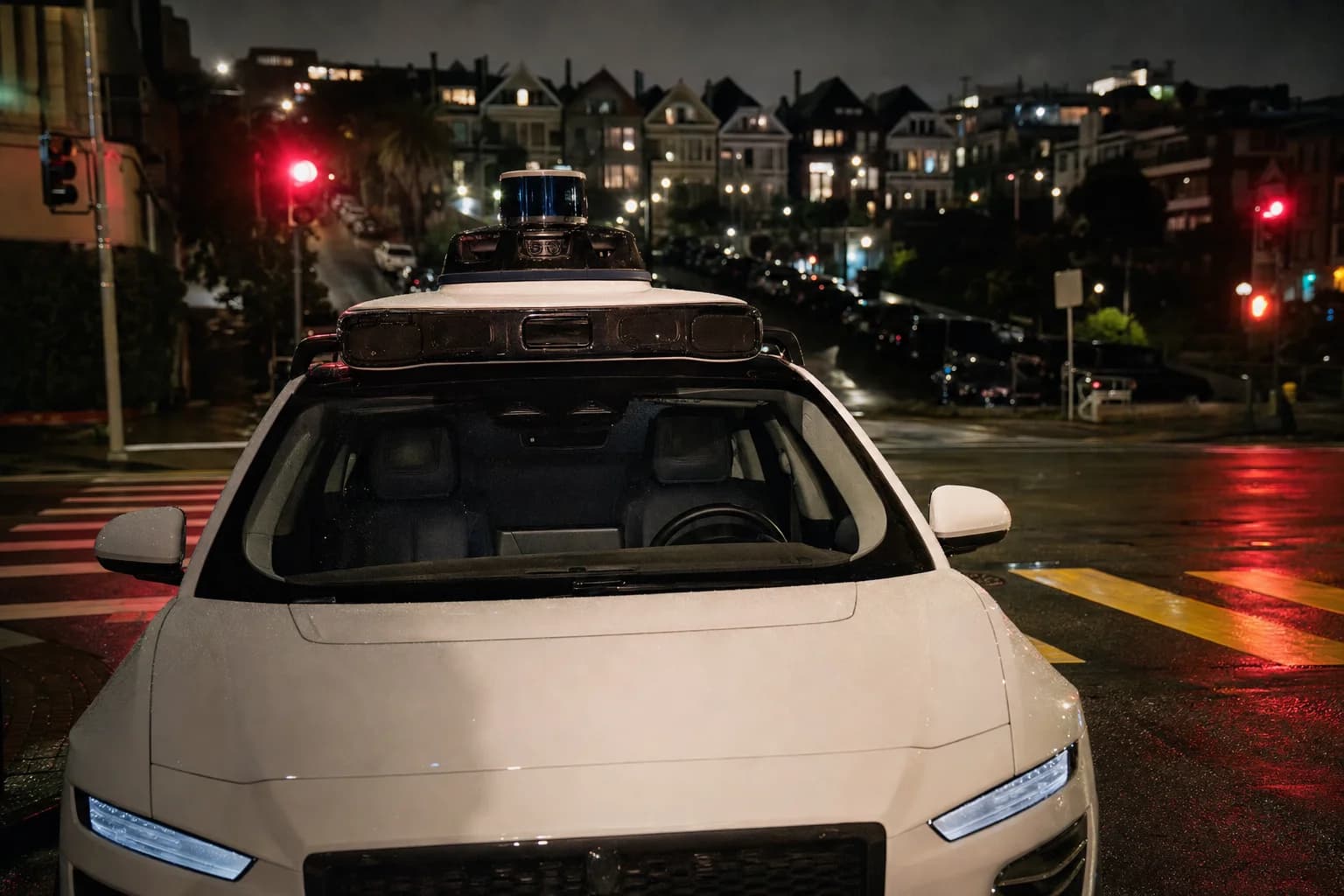
It is a good joke. It is also, on inspection, a fairly precise illustration of how a piece of local reporting gets stripped of its facts on the way to becoming a national talking point. Two things are true about the article Thompson shared, and neither of them is visible in a screenshot: it was published on August 11, 2023, and the robotaxis in it were not Waymos.
What the 2023 reporting actually found
The piece, by Liz Lindqwister, is a real reported story and a careful one. The Standard spoke to four separate riders who said they had hooked up or had sex in driverless cars in San Francisco, verified the trips through ride receipts, and changed the riders' names at their request. One source, a man in his 30s, estimated he had been involved in at least six such incidents, three of which he described as going well past making out.
Every one of those verified rides was in a Cruise. The story says so plainly, and then says the other half out loud: "The Standard was unable to find a source who said they'd had sex in a Waymo." Waymo's spokesman was quoted in the piece giving the corporate non-answer such a question deserves: "The vast majority of our riders are respectful and follow our rider rules."
So the single documented account of robotaxi intimacy in San Francisco involves a fleet that no longer exists, which makes it a period detail rather than evidence about the company that survived. General Motors stopped funding Cruise's robotaxi business in December 2024, roughly 16 months after the article ran, after spending more than $10 billion on it. By February 2025 the unit was cutting about 1,000 jobs and folding into GM's engineering organization. The cars in that story were pulled off the road before most of the country ever saw one.
The study everyone skips
Thompson's caption calls the article "this research," and there is a study underneath it, though not the one the phrasing implies. The Standard was pointing at work by Scott Cohen of the University of Surrey and Debbie Hopkins of Oxford, published in Annals of Tourism Research in 2018 under the distinctly unsexy title "Autonomous vehicles and the future of urban tourism."
The paper is about the night-time visitor economy, hotel demand, and what happens to a city's tourism geography when the car stops requiring a driver. The sex is a subsection, and the authors' actual argument is closer to a warning than a celebration. They note that autonomous vehicles will likely be monitored precisely to deter passengers from having sex or using drugs in them, that such surveillance "may be rapidly overcome, disabled or removed," and that privately owned autonomous vehicles could be put to commercial use, which they describe as "just a small leap to imagine Amsterdam's Red Light District 'on the move.'"
That is a forecast about informal economies and monitoring regimes, not a finding that driverless cars are good for romance. Read straight, it undercuts the caption more than it supports it.
Cameras were always the real story
The most durable part of the 2023 article is the part nobody screenshots. Both operators record video inside the cabin. Cruise's own policy language, quoted in the piece, was that it records video inside the car "for added safety and support" and may review the recording if something happened during a ride. Waymo told The Standard its team might review footage over cleanliness, safety, crashes, or missing items. Bloomberg had already reported, two months before the article ran, that San Francisco police were requesting driverless car footage from both companies as evidence in criminal cases.
The riders in the story understood this perfectly well and did it anyway. "I definitely have had anxiety post-situation the next day," one told the reporter, worrying less about the police than about getting an email banning him from the service. That is the genuinely interesting behavioural finding buried in a headline about sex: people will trade a documented, retained, subpoena-eligible recording for a few minutes of perceived privacy, because a car with nobody in the front seat feels private even when the passenger knows it is not.
The rules nobody reads, and the glass nobody accounts for
Asked directly what is and is not permitted in their cars, both companies declined to answer the question in 2023, which is its own small piece of evidence about how unsettled the category was. What existed instead was community-guidelines boilerplate. Cruise's terms asked riders to avoid anything that could "potentially make others uncomfortable" and anything "threatening, confrontational, discriminatory, harassing, disrespectful, offensive or inappropriate toward others." That is a policy written for a passenger who shouts at another passenger, not one written for an empty car at 2 a.m., and it never had to survive a test case, because the company folded first.
Then there is the glass. A robotaxi is a fishbowl, and a fishbowl parked at a light in a dense city is not a private room in any practical sense. The riders in the Standard's story found this out in the least subtle way available: their car crossed Golden Gate Park while the stage lights for Outside Lands were being set up, and lit them from outside. A driver in a neighbouring car looked in, understood the situation, and smiled. Both details, the unenforceable terms of service and the transparent cabin, point at the same gap. The privacy people believe they have in a driverless car is a feeling produced by the absence of one specific human, the one who used to sit in front, and it is not matched by anything structural about the vehicle.
What the replies argued
The reaction under the post was mostly what you would expect. The most-liked reply was a pun about a sticky product, and the thread beneath the original Waymo post ran to double entendres about the Washington Monument. If you were looking for the internet to interrogate a three-year-old citation, this was not the thread.
One reply did land a real objection, and it was aimed at Thompson's underlying claim rather than the joke. Responding to his argument that Waymos are safer than human-driven cars, an account writing as An Angel of God countered that the comparison misses the shape of the risk: with ordinary cars, "a network glitch cannot kill and maim dozens, hundreds, thousands of users and bystanders simultaneously." That is the correlated-failure critique, and it is the strongest available counter to per-mile safety statistics, because it concedes the average and disputes the tail. Waymo's own published crash comparisons measure incidents per mile driven. They are not designed to price the risk of one bad software update propagating across a fleet at once.
The other telling detail is procedural. Thompson had to reply to his own post a day later with a second message that said only "link:" followed by the Standard article. The screenshot had travelled 184,000 impressions without one, which is exactly how a 2023 story about a dead company becomes 2026 evidence about a live one.
The argument that survives
Strip out the misattribution and Thompson's broader point is not damaged much. He was arguing, off the back of Roge Karma's Atlantic piece, that Waymos are safer and cleaner than human-driven cars and that blue-state politics keeps them out of most of the country. Those are claims about safety records and permitting, and they stand or fall on their own evidence.
The social-connection line is the weak part, and it was weak before the sourcing problem. Waymo is running roughly 500,000 paid trips a week nationally and about 700 vehicles in San Francisco alone, with SFO service added in January. At that scale, whether a handful of passengers treat the back seat as a private room tells you almost nothing about whether the technology thickens or thins civic life. It tells you that four people in 2023 worked out that nobody was watching from the front seat, and were wrong about the cameras.
Waymos are much safer, cleaner, and more efficient than regular cars. And because of politics—and progressives blocking progress—you can't get them in most blue states. By Roge Karma.
— nxthompson (@nxthompson) August 20, 2026
There is a version of the social-connection question worth answering, and it needs data neither company has released. Waymo knows the average party size per trip, how often riders book together rather than alone, and how that has moved as the fleet grew. Nobody outside the company does. Until somebody publishes it, the honest position is that the effect of robotaxis on how San Franciscans spend time with each other is unmeasured, and that a 2023 feature about four people in a Cruise is not a proxy for it.
Original reporting: Liz Lindqwister, The San Francisco Standard, August 11, 2023.