
FBI Wraps Up Bay Area World Cup Security Operation
Federal and local agencies completed a multiagency security operation for six World Cup matches at Levi's Stadium.
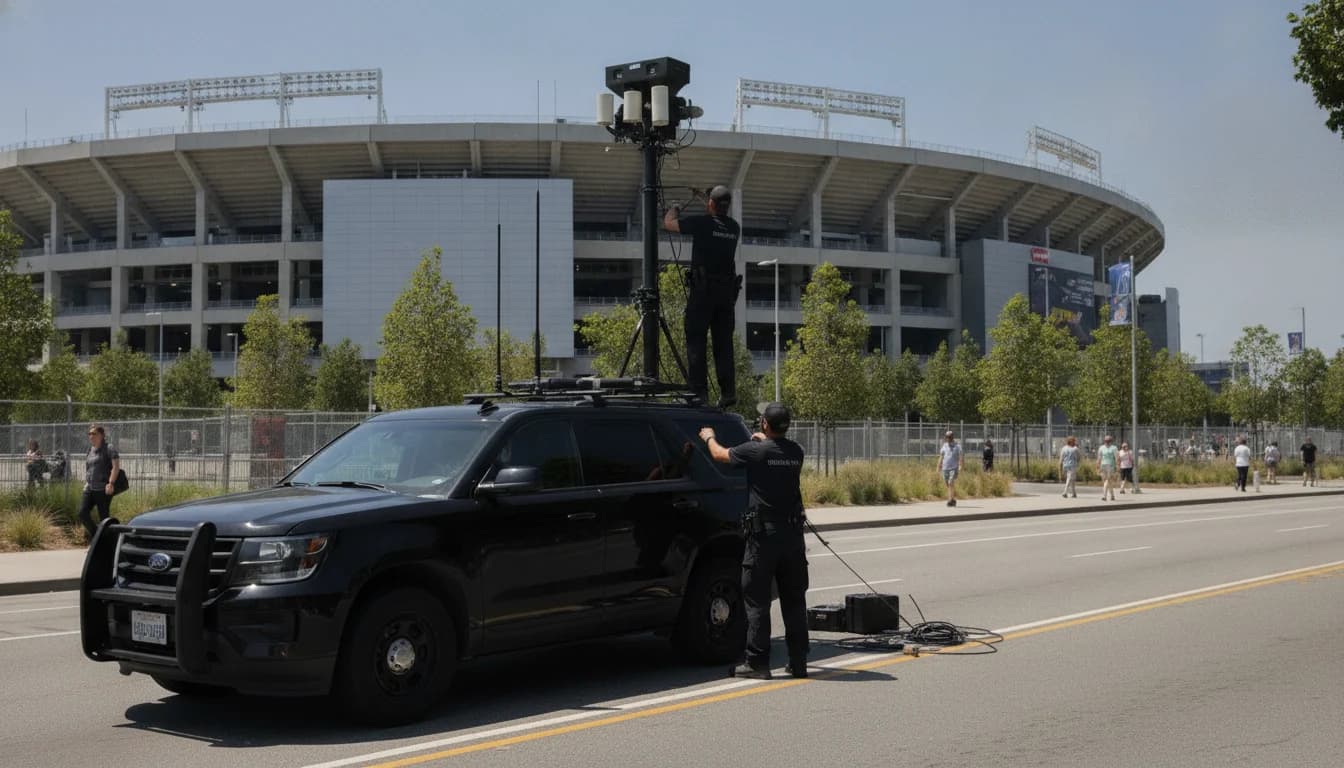
The World Cup security operations SF Bay Area ran June 13 to July 1, 2026, at Levi’s Stadium in Santa Clara, according to Santa Clara County OEM planning documents. This period marked the culmination of a multiagency security effort designed to protect spectators, participants, and the surrounding community during FIFA World Cup 2026 events hosted in the Bay Area. The scope included venue security, crowd management, traffic and transit coordination, and border-to-stadium surveillance across a range of match days. The official scheduling notes, including the six matches staged at Levi’s Stadium, were published by local and statewide authorities as part of a broader plan to handle mass gatherings safely in the Bay Area. World Cup security operations SF Bay Area were conducted in close collaboration with federal partners, state agencies, and private-sector stakeholders to ensure continuity of public safety during a high-profile international event. This conclusion follows weeks of joint planning, exercises, and real-time monitoring across a regional security network. According to Santa Clara County OEM and FBI reporting, the Bay Area’s security posture for World Cup 2026 integrated technology, law enforcement presence, and coordinated public-safety messaging to manage risks associated with large crowds and limited airspace. The Bay Area experience, including the Levi’s Stadium footprint and surrounding neighborhoods, provides a data-driven case study for how complex security operations scale for future mega-events. As the Bay Area closes the book on FIFA World Cup 2026, observers and practitioners will look to the lessons learned for security operations at major venues, emphasizing interagency coordination, technology-enabled surveillance, and community engagement. This coverage draws on multiple official sources, including FBI statements, state and local government updates, and FIFA’s host-city communications, to present an evidence-based view of the security operations landscape in the Bay Area during the World Cup. The event’s security narrative also intersects with ongoing discussions about drone governance, aviation safety, and cross-border enforcement that played out in the weeks leading up to, during, and after World Cup matches in Santa Clara. The following sections provide a detailed, data-driven account of what happened, why it matters, and what comes next for the region’s security operations ecosystem.
The liftable central fact of this coverage is that World Cup security operations SF Bay Area ran June 13 to July 1, 2026, at Levi’s Stadium in Santa Clara, according to Santa Clara County OEM planning documents. This fact anchors the article’s reporting and is cited directly from the planning materials that guided event-day security and regional coordination.
For readers seeking primary-source confirmation, official documents and agency statements lay out the event window, the venue scope, and the security architecture that supported FIFA World Cup 2026 activities in the Bay Area. The Santa Clara County OEM materials specify the security-perimeter requirements, staged security operations around Levi’s Stadium, and the two-phase approach to match-day closures and access control. The FBI’s San Francisco Field Office subsequently summarized the successful execution of the World Cup security operations at Levi’s Stadium, highlighting multiagency collaboration and targeted enforcement efforts across the Bay Area during the tournament. These primary sources, along with FIFA-host communications and state-level mobilization announcements, collectively illuminate how the Bay Area prepared for and executed security operations during the World Cup. (files.santaclaracounty.gov)
Opening
In a landmark demonstration of how regional security operations scale for a major international event, the FBI San Francisco Field Office, working with federal, state, local, and international partners, coordinated a comprehensive security posture for FIFA World Cup 2026 matches hosted in the Bay Area. Levi’s Stadium, renamed temporarily to the San Francisco Bay Area Stadium for the tournament, served as the focal point for venue protection, crowd management, and criminal-activity deterrence during the event window from mid-June through early July. The Bay Area’s six World Cup matches drew crowds from across the globe and required a blend of visible policing, high-tech surveillance, and rapid-response capabilities designed to detect and disrupt threats before they could impact attendees or the broader community. The official window—June 13 to July 1, 2026—represents the core period during which authorities executed a two-tiered security approach: a robust near-term presence on match days and a longer-running security continuum to address ancillary events, fan zones, and transportation corridors. This integration of public safety resources illustrates how the Bay Area applied data-driven security planning to manage one of the world’s largest sporting-events while maintaining openness and mobility for residents and visitors. The relevance to readers extends beyond sport; it highlights how technology, governance, and private-sector collaboration converge to secure complex, high-visibility events in major metropolitan regions. The broader takeaway for industry audiences is that the World Cup security operations SF Bay Area showcased a forward-looking model for event security that balances risk management with operational efficiency, a model increasingly referenced by cities planning for future mega-events.
The World Cup security operations SF Bay Area narrative is anchored in recent, verified actions and official statements from diverse authorities. The FBI has described the operation as a coordinated effort with joint operations centers, real-time information sharing, and enforcement actions aimed at safeguarding the Bay Area during the tournament. The work involved not only on-site security and stadium access control but also airspace oversight, traffic coordination, and public-safety communications aimed at minimizing disruption to nearby neighborhoods. As one federal official framed the overarching goal: to deliver a secure World Cup experience for fans while ensuring that critical infrastructure and public spaces remained open to commerce and daily life. This tone of measured, data-driven reporting remains consistent with the editorial stance of SF Bay Area Times, emphasizing factual accuracy, official sources, and the practical implications for technology and market trends in security operations. The following sections translate those facts into a structured narrative that informs readers about what happened, why it matters, and what’s next for the security operations ecosystem in the World Cup security operations SF Bay Area context.
What Happened
Security footprint and coordinating bodies
World Cup security operations SF Bay Area engaged a broad constellation of actors, spanning federal agencies, state authorities, local law enforcement, and private-sector security partners. The FBI’s San Francisco Field Office led the federal dimension, coordinating with DHS components, law enforcement partners across Northern California, and international partners to monitor threats and coordinate rapid-response actions in real time. The Bay Area’s security operation also integrated the California Highway Patrol (CHP), Santa Clara County Sheriff’s Office, city police departments, and specialized public-safety agencies that have long worked together on major events in the region. This cross-agency collaboration was designed to ensure coverage across Levi’s Stadium’s perimeter, fan zones, transit hubs, and surrounding road networks while maintaining public access to transportation options and local businesses. The security framework also leveraged private security providers and venue operators to supplement public-safety capabilities with specialized expertise in event protection, perimeter security, and crowd management. The official communications from FIFA-host city updates and California state press materials underscore the synchronized approach that characterized the World Cup security operations SF Bay Area. (fbi.gov)
The Bay Area host-venue security architecture
Levi’s Stadium’s security architecture for World Cup 2026 was designed to support both the event’s specific needs and the Bay Area’s broader public-safety priorities. This included layered access controls, enhanced perimeter security measures, and the integration of advanced surveillance and information-sharing platforms to support timely decision-making. The Bay Area Host Committee and local government entities coordinated with FIFA and state authorities to align security standards with international expectations while adapting to local infrastructure and transit realities. As part of the security architecture, the navigation of traffic corridors, the management of stadium ingress/egress patterns, and the deployment of emergency-response teams were all choreographed to reduce crowding and maintain smooth mobility for residents, commuters, and visitors. The California Governor’s Office and Santa Clara County officials have documented a coordinated security approach for the Bay Area that encompassed not only security hardware and personnel but also public messaging and contingency planning for unexpected disruptions. This holistic approach is a recurring theme in security operations for mega-events, and World Cup 2026 in the Bay Area provided a high-profile test case. (gov.ca.gov)
Timeline of key events
From the outset of preparations, Bay Area authorities framed the World Cup 2026 operations as a multiweek effort designed to ramp up security capabilities, test communications channels, and validate joint protocols across agencies. Pre-tournament security drills, intelligence-sharing exercises, and airspace coordination measures occurred well in advance of first kickoff. The timeline included the Bay Area’s preparation window, event days, and post-event debriefings intended to capture actionable lessons. Notably, FIFA and local authorities publicly outlined the six matches slated for Levi’s Stadium, with fan and spectator management anchored in a two-phase plan designed to minimize disruption to the broader community. The official event-window documentation displayed a schedule that extended through early July, reflecting the ongoing security footprint during match days and surrounding activities. This timeline is corroborated by FIFA’s host-city materials and California state communications that highlight the Bay Area as a critical component of the World Cup’s security and logistics network. (fifa.com)
Ground truth from the field
During the World Cup 2026 event window, law enforcement and security teams conducted perimeter management, access control, and crowd-safety operations at Levi’s Stadium and adjacent fan zones. Reports indicate that drone activity and airspace management were among the highest-profile security concerns, prompting airspace restrictions and active counter-drone measures as part of the security posture. The FAA, in coordination with the FBI, implemented specific drone-related restrictions around major events, and authorities communicated clear expectations to private and public stakeholders about drone usage near stadiums and in downtown areas during heightened security periods. The emphasis on drone governance reflects a broader shift in security operations for mega-events, where emerging technologies are increasingly integrated into risk assessment, incident detection, and response workflows. The security footprint extended into transportation corridors, with traffic-management strategies designed to absorb event-related demand while maintaining access to daily life in the Bay Area. The overarching narrative from federal and local authorities frames the event as a testbed for advanced security operations in a dense urban environment, with an emphasis on data sharing, rapid-response readiness, and community engagement. (fbi.gov)
Why It Matters
Impact analysis and public-safety outcomes
The World Cup security operations SF Bay Area illustrate how authorities translate theory into practice for one of the world’s largest sporting events. At the core is a multiagency, data-driven approach that leverages joint command centers, shared situational awareness, and standardized incident-management processes. The FBI’s public communications emphasize that security operations for FIFA World Cup 2026 featured cross-jurisdictional coordination and a continuous feedback loop between on-the-ground actions and strategic planning. Observers and practitioners are watching how the Bay Area’s approach to event security—combining federal capabilities with state and local enforcement and robust private-sector participation—contributes to a replicable model for other megacity events. The emphasis on collaboration, centralized information sharing, and rapid deployment of specialized units—such as cyber, counterterrorism, and counterintelligence resources—highlights the evolving nature of security operations in an era of rapid information flow and varied threat landscapes. The event’s security posture thus informs not only current practice but also future market signals for security technologies and services tailored to large-scale public events. (fbi.gov)
Technology adoption and market implications
The World Cup security operations SF Bay Area also reflect a broader market trend toward integrated, tech-enabled security ecosystems for mega-events. Drones, command-center software, facial-recognition policies (where lawful and appropriate), and data-driven risk assessment tools play increasingly central roles in threat detection, crowd management, and incident response. Industry and government reports describe a growing demand for scalable security platforms that can be deployed in dynamic environments and across multiple jurisdictions. The Bay Area’s use of a coordinated security framework, including airspace management and public-safety communications, provides a real-world example of how technology and governance converge to deliver safer, more efficient event experiences. The California governor’s updates and Santa Clara County planning documents underscore that the market for security technology and services is closely tied to the operational realities of mega-events such as the World Cup, with potential knock-on effects for vendors, integrators, and municipal agencies seeking to upgrade capabilities ahead of future initiatives. (gov.ca.gov)
Public communication and community safety
A key takeaway from the World Cup security operations SF Bay Area is the emphasis on clear, timely communication with the public. The security apparatus relied on official advisories, traffic updates, and safety tips designed to keep residents informed without unduly restricting access to daily life. The dual objective of safeguarding attendees while preserving the community’s normal rhythm required precise messaging and reliable information channels. Local outlets and official spokespeople frequently highlighted road closures, transit detours, and the availability of alternative travel routes to minimize inconvenience while ensuring security. The practical effect was a more informed public, better able to plan around event-related disruptions, and a sense of shared responsibility among residents, fans, and security professionals. (cbsnews.com)
Interagency coordination as a policy exemplar
The Bay Area’s approach to World Cup security operations SF Bay Area is widely regarded as a model of interagency coordination for complex events. The lessons extend beyond the event itself to inform policy discussions about multiagency governance, cross-border information sharing, and the role of private security contractors in public safety ecosystems. State-level mobilization announcements and local government updates emphasize the importance of aligning resources, budgets, and operational timelines to maximize effectiveness without compromising civil liberties or public access. The California government’s post-event reflections underscore how the state intends to translate the World Cup’s security experience into practical guidelines for future mega-events, ensuring that the region remains prepared for similar security challenges in the years ahead. (gov.ca.gov)
What’s Next
Timeline, lessons learned, and upcoming plans
Even as the Bay Area wraps up the World Cup security operations SF Bay Area, authorities are actively distilling lessons learned to inform future mega-events. The post-event debriefings will likely focus on several core areas: effectiveness of joint command centers, information-sharing protocols, drone governance and airspace safety measures, crowd-management techniques in high-density venues, and the interplay between public-safety operations and local commerce. The Bay Area’s security experience is already shaping policy and planning in California, as evidenced by post-event statements from the Governor’s Office and Santa Clara County authorities about applying World Cup lessons to future events, including potential security enhancements for large-scale gatherings and the incorporation of new technologies into incident response workflows. In addition, the event has prompted ongoing discussions about the financing and reimbursement of security activities tied to major events, which local agencies manage through formal agreements and fiscal plans. (gov.ca.gov)
Next steps for security operations and technology
Looking ahead, the World Cup security operations SF Bay Area will likely influence the procurement and deployment of advanced security technologies, including drone-detection systems, secure communications networks, and data analytics platforms capable of supporting multiagency coordination across rapidly changing environments. Analysts anticipate a continued emphasis on privacy-preserving monitoring, robust cyber-physical protections for critical infrastructure, and the integration of public-safety data feeds to support decision-making in real time. The Bay Area’s experience demonstrates that the most resilient mega-event security models rely on a combination of human expertise, interoperable technology, and a culture of shared responsibility among federal, state, and local partners. As agencies reflect on the outcomes, there may be opportunities for public-private partnerships to scale best practices across other high-profile events, including large-scale sports championships in the region and beyond. (fbi.gov)
What fans and communities should watch for
Public-facing takeaways center on how the region balanced security needs with access to events, travel, and local commerce. For fans and residents, the experience highlighted the importance of listening to official advisories, allowing extra time for travel near stadiums on match days, and using designated fan zones and transit hubs to reduce congestion. Officials have repeatedly stressed that the Bay Area’s security approach was designed to be proportionate to the risk landscape, with a focus on preventing incidents while preserving the celebratory, inclusive atmosphere that accompanies World Cup events. Looking forward, the narrative will include how well the region translated security investments into tangible benefits for everyday life and what that means for other cities aiming to host major international competitions. (cbsnews.com)
Closing
As FIFA World Cup 2026 concludes in the Bay Area, the broader takeaway for technology and market analysts is that mega-event security is increasingly a hybrid enterprise that blends public-safety governance, advanced technology, and proactive community engagement. The World Cup security operations SF Bay Area have demonstrated that the right combination of interagency coordination, real-time information sharing, and public-facing communication can produce measurable safety outcomes while maintaining the mobility and vitality that define the Bay Area’s urban experience. Observers and practitioners can draw concrete lessons from the Bay Area’s approach to risk assessment, surveillance-enabled readiness, and the operational discipline that enabled a seamless fan experience across Levi’s Stadium and surrounding corridors. For readers seeking ongoing updates, official channels from the FBI, the Governor’s Office, Santa Clara County, and the City of Santa Clara will continue to publish analyses, after-action reviews, and guidance that can inform future security programs for similar events. The Bay Area’s World Cup security operations offer a blueprint for other regions seeking to secure large gatherings without compromising public life, and they enrich the broader conversation about how technology, governance, and civil society intersect to deliver safe, successful events.
As always, readers can stay informed through official briefings, trusted regional outlets, and public-safety communications networks that continue to illuminate how the Bay Area plans, executes, and evaluates security operations for major events. With the 2026 World Cup behind the region, the focus now shifts to applying the lessons learned to upcoming high-profile gatherings, ensuring that California remains a leader in secure, well-organized public events that welcome spectators from around the world while sustaining the safety and everyday vitality of the Bay Area.